TRU Case Study
Executive Summary Network Rail and the TRU Alliance are working with eviFile to power their digital project management and progressive

The advent of Industry 4.0 has seen great strides across multiple sectors. With a suite of tools from data analytics to automated reporting, we’re seeing businesses across the globe improve their decision-making and up productivity. Evidence-based decision-making is crucial in the rail sector. From maintaining track safety to improving timetabling, we cannot afford to make decisions based on an educated guess. But despite the tools available, the industry sometimes struggles to join the dots that are required for digital transformation. There are three key challenges currently facing the industry:
Need an external view on your digital strategy? Click here to book a session with one of our team.
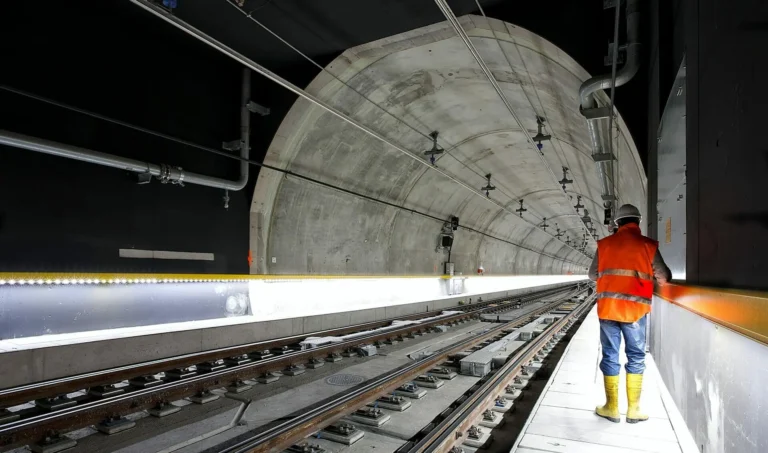
Critical decision-making in the rail sector spans several areas, including governance, compliance, assurance and delivery. In turn, this impacts various areas of a business, from health and safety to operations, tech, environmental concerns and overall performance. With so many moving parts in this challenging industry, linking all of these areas to get the overall benefit presents the biggest challenge and the greatest risk for human error. With so many digital tools at our disposal, it’s likely that key information will be lost. Facing the pressures of day-to-day delivery, staff may fail to:
Essentially, without one holistic digitisation process, we lack the seamless path from data point-of-entry to point-of-use. This can render our data useless. At best, it doesn’t give us the best value that it can – simply because it is not joined up across every department. Worse still, too many tools may lead to digital fatigue. Our teams may be relying on multiple tools, each of which provides limited functions, such as a specific data capture tool or even just Excel spreadsheets. When these tools cannot deliver the outcomes we need and don’t fit into our normal work rhythms, we become frustrated and resort to manual data collection. In turn, we miss out on efficiencies and lack the information to make evidence-based decision-making.
An effective digital transformation process should give us connectivity, access and visibility of everything from a single source of truth. Information should not be siloed, and staff should feel confident to leverage data from point-of-entry right through to point-of-use, having it automatically tailored to their specific needs. With that in mind, we should look for three key features when sourcing a digital process transformation provider:
Your digital tools should efficiently connect your assets to building information modelling data and work this into the whole asset lifecycle.. This is made possible with tailored data integrations into forms and reports right at the inception of a project, building on this through the build, testing and commissioning and then handing this over into maintenance and operations for ongoing management. This facility is key to allowing you to manage assets efficiently — as well as keep an eye on the essentials such as overall assurance, maintenance history, modifications and upgrades and lifecycle asset data quality accuracy.
It may be stating the obvious, but to be able to assure quality you have to avoid the main cause of a lack – human error. Your chosen tools should be able to automate QCS data collection, generation and presentation -, feeding the document submission process for EIS, ongoing asset management, project close-out, audit and lessons learned. Better still, quality alerts work in the same way as safety alerts – letting field users raise a quality concern to be escalated to the people who need to see it.
Real-time, tailored, data-driven dashboards should convert data into actionable intelligence, affording the user to manage by exception with confidence and assurance.. The data in this dashboard is collected live and made available in a bespoke format to the user’s needs,rather than after the event and in a generic form, using mobile devices and automated workflows. This gives subcontractors a consistent standard for collection and presentation that fits into how they work, rather than having to change processes to fit the system.. Engineers, managers, directors and Sponsors in turn, will feel empowered to make proactive decisions using live delivery status visibility.
Interested in discovering how eviFile can improve productivity and ensure compliance for your upcoming projects?
Executive Summary Network Rail and the TRU Alliance are working with eviFile to power their digital project management and progressive
Executive summary From May 2022, the UK’s leading supplier of trains and rail services will use eviFile’s platform to track
Executive summary SPL Powerlines UK (SPL) is working with eviFile to digitise the London to Wigston, L2W project – part

Features
Pricing
Knowledge Base
Blog Events
About
Contact Us
Enterprise Edition
Proof Edition Mobile
Application Capability
Configurable Forms
Workflow Management
Power BI Reporting
Digital Control
Rooms Integrations
Digital Progressive Assurance
Overhead Line Electrification (OLE)
Non-Destructive Testing
Disruptive Possessions Management
Rail
Construction
Renewables


